A 2,000-year journey of spiritual companion, cultural creation, and national identity in Vietnam.
According to historical records, Buddhism arrived in ancient Vietnam (Giao Châu) around the 1st century CE.
From the very beginning, Buddhism blended harmoniously with local animistic beliefs, quickly forming a unique and rich Vietnamese identity.
One of the earliest documented Buddhist masters who gathered at Luy Lâu to teach and translate scriptures before spreading teachings to Southern China.
The foundational period when Buddhism first took root in Vietnam. Numerous temples were built, scriptures were translated, and followers grew steadily.
Kings respected monks and established Buddhism as a major spiritual and political support for the state, granting master monks high royal advisory status.
Led to the golden age under the Lý and Trần dynasties, where it became a state religion, molding the cultural identity and ethics of the Vietnamese nation.
Under the Lý kings, Buddhism was elevated to a state religion. The royal court sponsored massive temple constructions, promoted Buddhist education, and carved sacred texts.
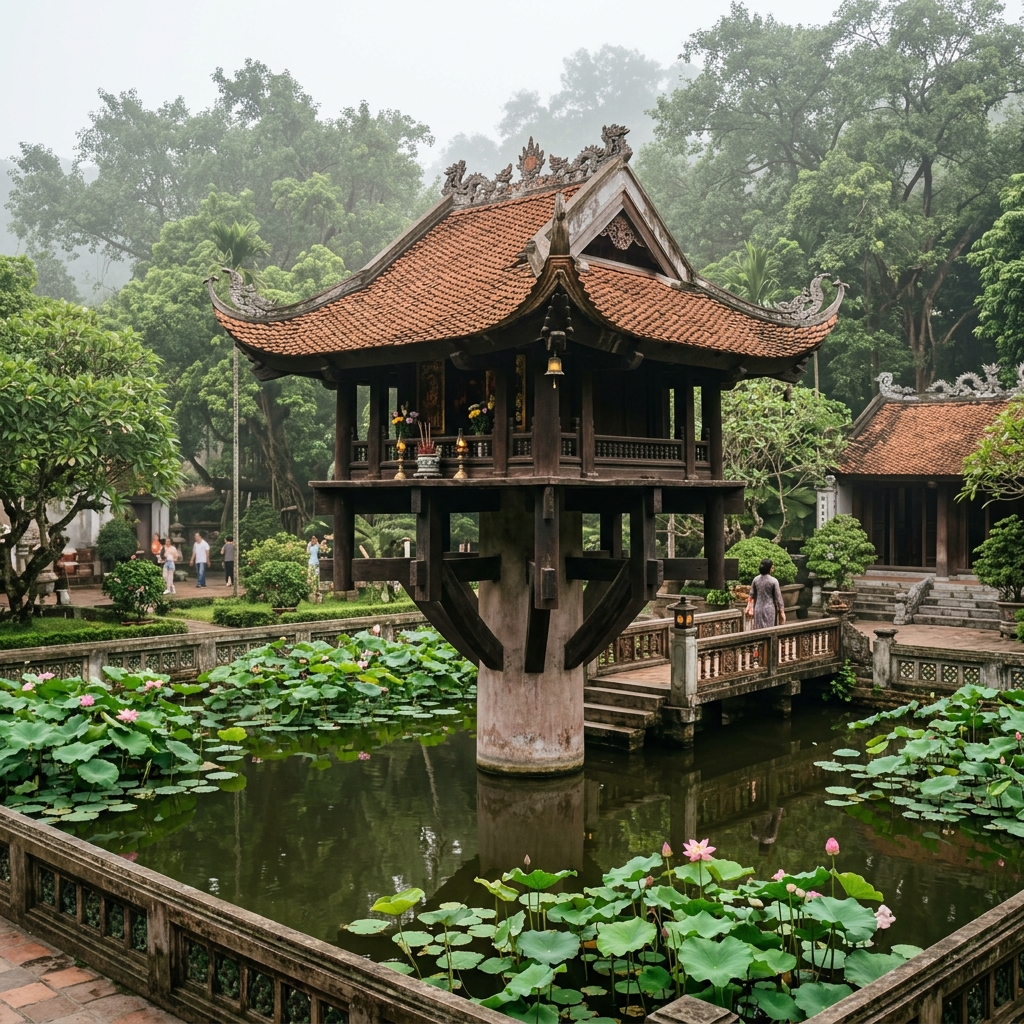
The oldest temple in Hanoi (originally 6th century), expanded during the Lý Dynasty to serve as the center of royal ceremonies.
The wooden structure rests on a single stone pillar, uniquely shaped to resemble a lotus flower blossoming out of the pond. It stands as a timeless masterpiece of Vietnamese Buddhist art.
The Trần era witnessed the birth of the Trúc Lâm Zen School, founded by King Trần Nhân Tông who abdicated his throne to become a monk on Yen Tu Mountain.
Encouraged practitioners to live actively in society, fulfill civic duties, and practice mindfulness amid everyday life.

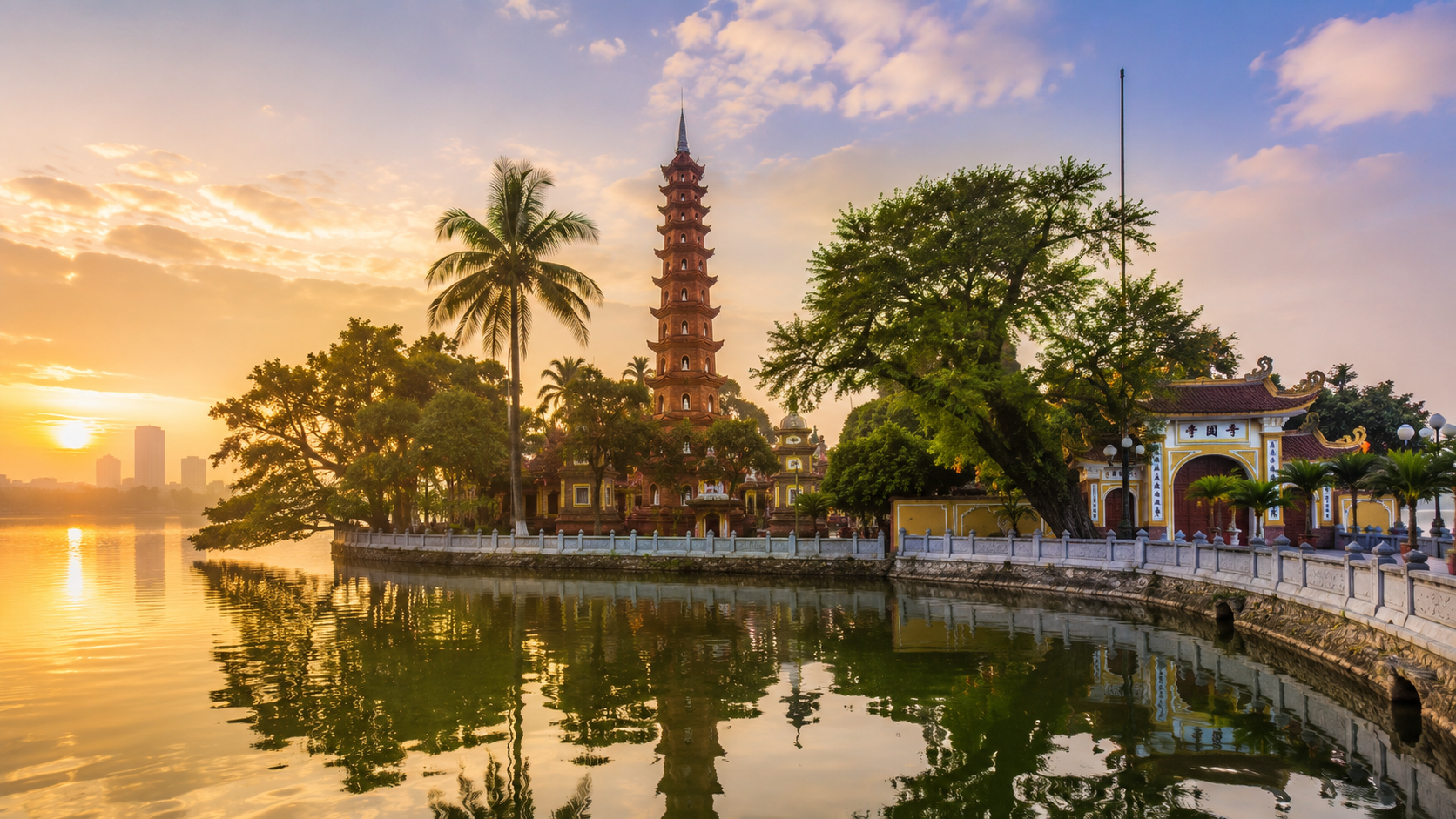
A majestic 14-story red brick tower built in 1305 to store imperial relics, representing Trần architectural ingenuity and spiritual elevation.
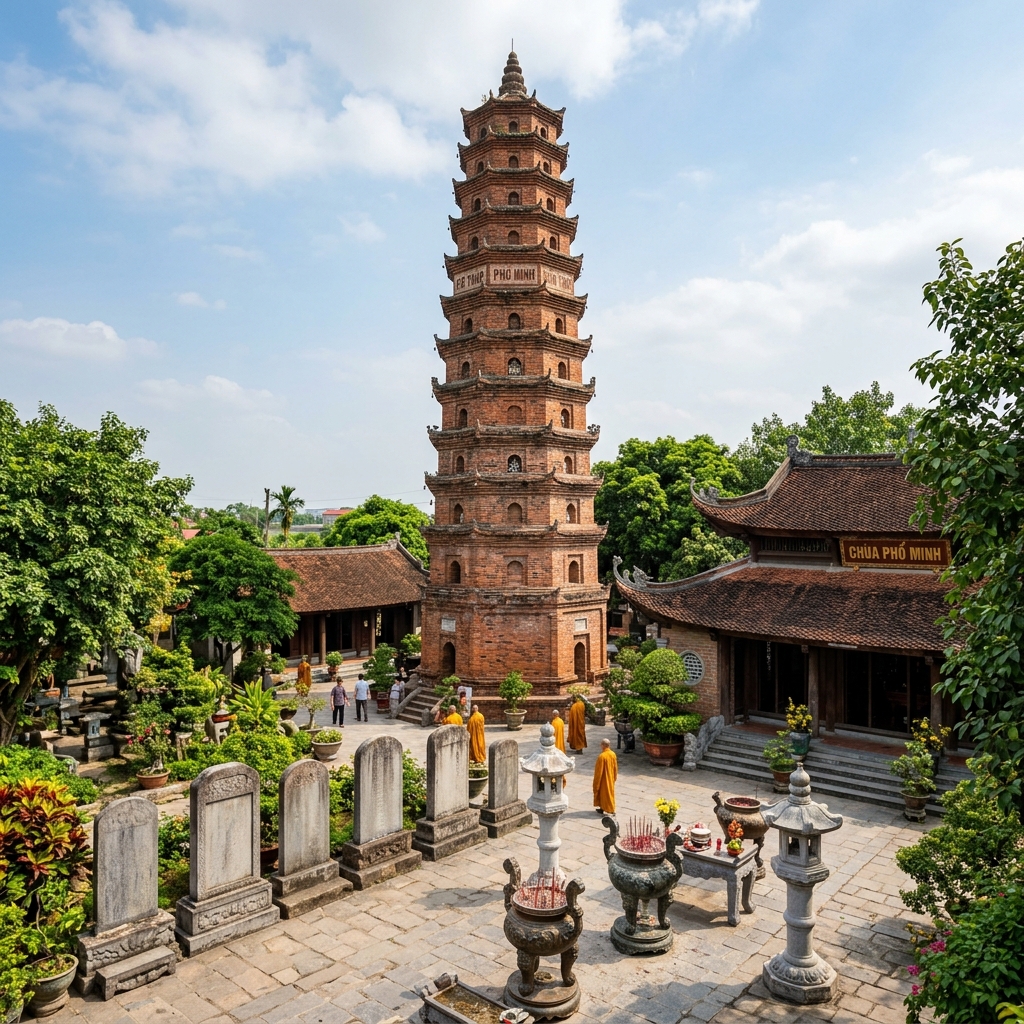
Although Confucianism became the official state philosophy during these periods, Buddhism remained highly popular and protected among the general populace. Pagodas were preserved, and traditions continued to be passed down through generations.
In 1981, the Vietnam Buddhist Sangha was established, successfully uniting different Buddhist branches. Today, the Sangha actively contributes to modern education, healthcare, environmental projects, and international exchange.
Brought from Sanskrit/Chinese sources. Emphasizes the Bodhisattva ideal of compassion and saving all beings. It represents the majority of Vietnamese Buddhists.
Adopted by ethnic Vietnamese in the 20th century. Focuses on original Pali scriptures, meditation, and strict adherence to monastic disciplines.
An integral pillar of ethnic Khmer life and culture in Southern Vietnam. Temples serve as schools, community centers, and cultural hubs.
Founded in Vietnam by Patriarch Minh Đăng Quang in 1944. Successfully harmonizes Theravāda monastic rules with Mahayana philosophical ideals.
Today, all Buddhist traditions in Vietnam belong to the unified **Vietnam Buddhist Sangha**. This structure operates branches from national and provincial levels down to local districts.
This unified system allows distinct traditions to preserve their unique practices while cooperating under a shared national organization to serve society.
Laquered wooden statues, curved tiled roofs, stone lotus carvings, and towers blending with nature.
Rich collection of poetry, philosophical texts from dynastic Zen masters, and elegant script calligraphy.
Recitative chanting (tụng kinh) accompanied by bells, drums, and wooden fish to quiet the mind.
Vietnamese temples are not just religious places; they are community centers keeping traditional ethics, charity, and historical values alive throughout generations.
Celebrating the birth, enlightenment, and passing of the Buddha. Large assemblies, street lanterns, and floating candle lights.
A festival of gratitude and filial respect for parents and ancestors. Celebrated with the symbolic rose ceremony.
A three-month period when monks and nuns stay together for concentrated study, meditation, and practice.
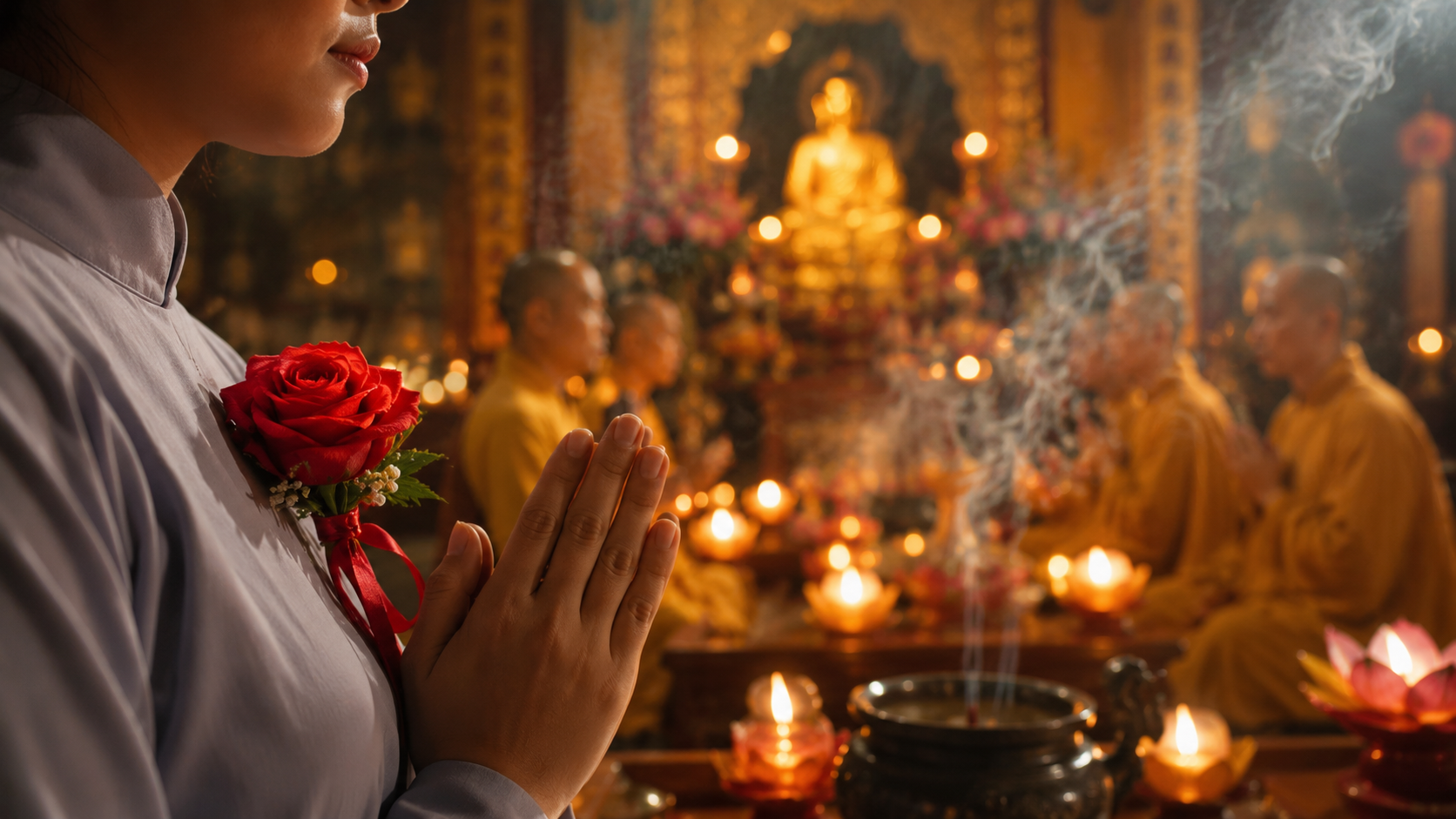
For nearly 2,000 years, Buddhism has always been closely connected with the Vietnamese people, actively helping society through charity, education, and peace.
Promoting personal ethics, care for others, and community harmony.
Running free clinics, charity kitchens, orphanages, and disaster reliefs.
Safeguarding national heritage and promoting international friendships.
Vietnamese Buddhism is not only a religion but also an important part of the nation’s history and culture. For nearly 2,000 years, Buddhism has grown together with the Vietnamese people, adapting to every period of history.”
Thank you very much for your attention